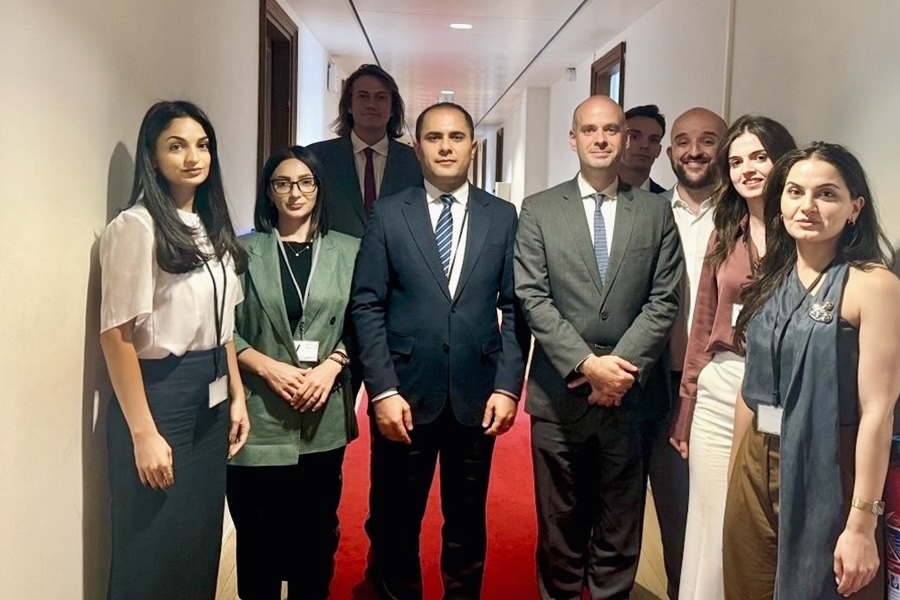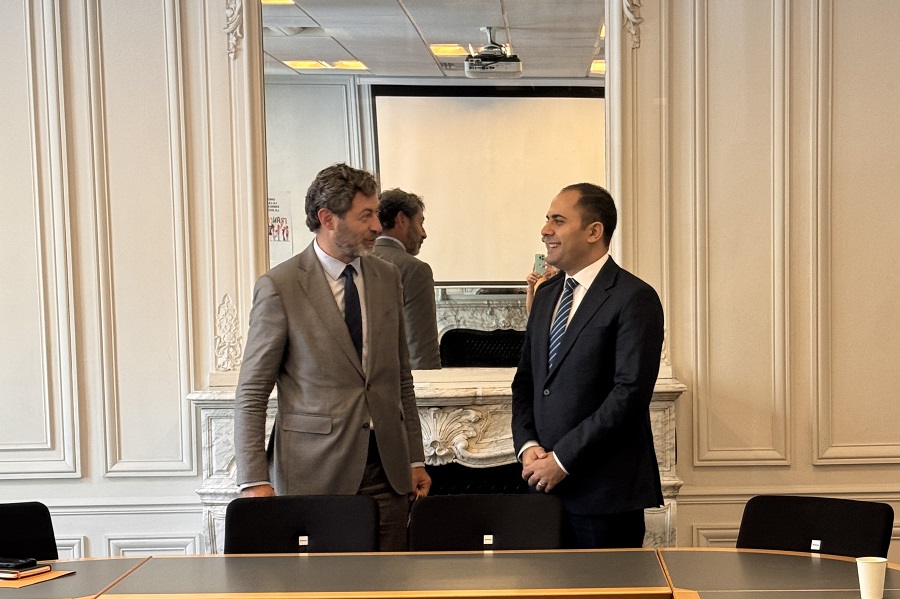
The delegation of the Information and Public Relations Center (IPRC) paid a working visit to the French Republic on September 7–8 at the invitation of the International Organisation of La Francophonie (OIF).
At the OIF office, IPRC Director Gor Tsarukyan and the delegation were received by Nicolas Guinard, Director for Political Affairs and Democratic Governance. The discussions focused on the steps being taken to strengthen the resilience of the information environment in the context of democratic processes and to counter information disorders.
Particular attention was paid to the OIF’s programmes aimed at combating disinformation and its experience in implementing these programmes, as well as to the work being carried out to develop fact-checking and media literacy initiatives. The sides attached importance to the cooperation already existing between IPRC and the OIF in these areas and agreed to further deepen it.
With the support of the OIF, the delegation held meetings in Paris with representatives of state and public institutions of France operating in the field of information security and resilience, including representatives of the Ministry for Europe and Foreign Affairs of France (MEAE) and the French audiovisual and digital communications regulatory authority (ARCOM).
Discussions related to cooperation were also held with representatives of media and fact-checking organisations, including Agence France-Presse (AFP) and the non-governmental organisation LaReponse.Tech, which presents the AI-powered fact-checking initiative Askvera.org. During the meetings, the delegation presented Stugel.am, a content verification platform developed by IPRC.
The discussions during the two-day visit focused on current challenges in the information environment, issues related to ensuring a coordinated response within the public administration system aimed at addressing these challenges, strengthening public resilience through government–society dialogue and cooperation, as well as practices applied in these areas in the two countries. Views were exchanged on the regulation of digital platforms and media, new opportunities emerging in the field as a result of advances in artificial intelligence, and ensuring a balance between countering information manipulation and interference and protecting freedom of expression. The discussions also addressed mechanisms for monitoring the information environment, early detection of threats, and responding to them.